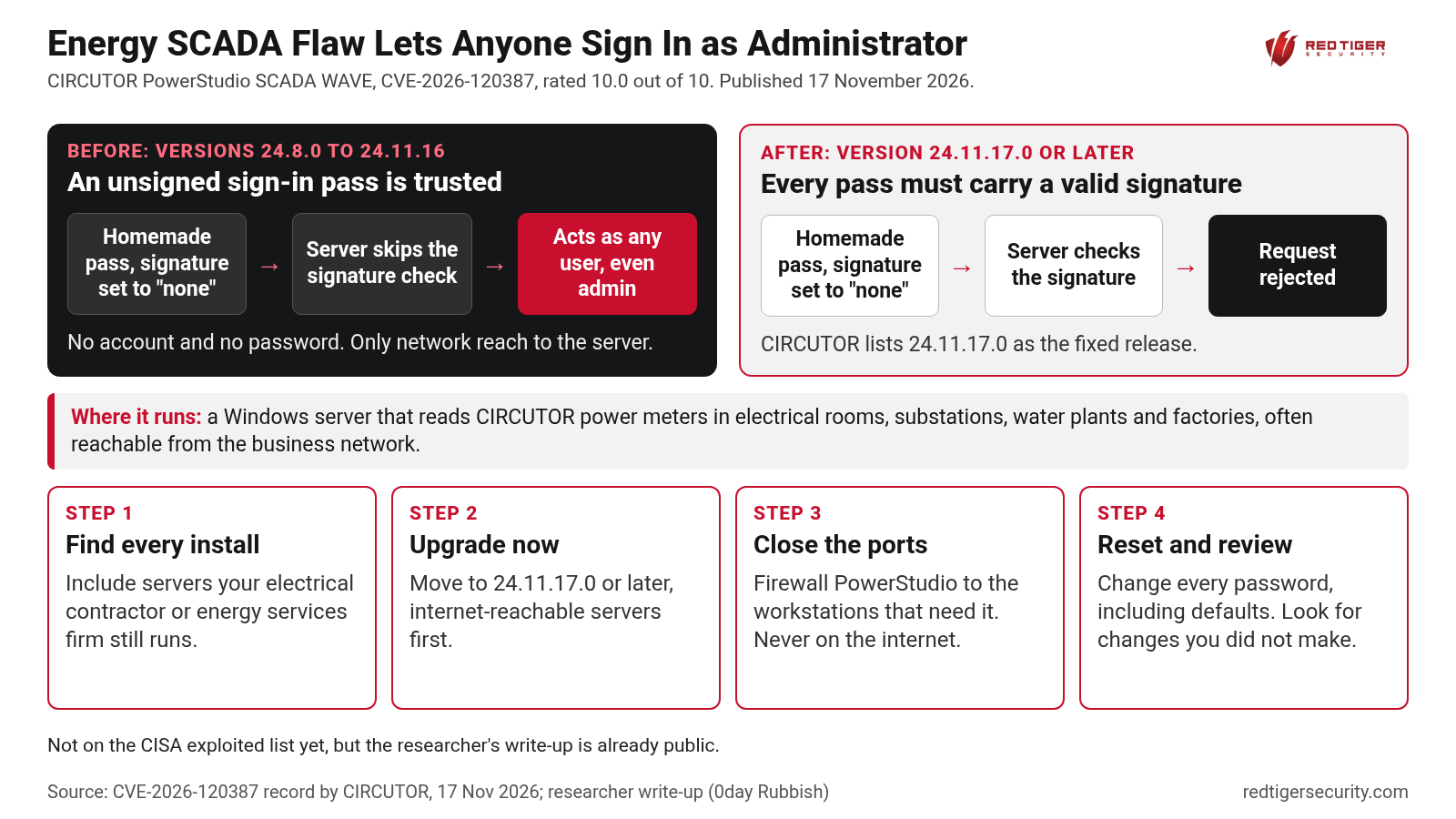
CIRCUTOR, the Spanish maker of power meters, power quality analyzers and energy management equipment, published a critical vulnerability on 17 November 2026 in PowerStudio SCADA WAVE, its supervisory control and data acquisition (SCADA) software for monitoring and managing electrical energy. The flaw, CVE-2026-120387, is rated 10.0, the highest possible score on the Common Vulnerability Scoring System (CVSS) version 4. It lets someone with no account and no password get past the sign-in and act as any user, including an administrator. CIRCUTOR has released a fix in version 24.11.17.0. The flaw is not listed as exploited in the Known Exploited Vulnerabilities (KEV) catalog run by the Cybersecurity and Infrastructure Security Agency (CISA), but the researcher who found it has published a detailed public write-up, so owners should not wait.
PowerStudio SCADA WAVE is built from many small services that check a sign-in token, called a JSON Web Token (JWT), on every request. A JWT is a small digital pass that a server hands out after you log in, and it is supposed to carry a cryptographic signature so nobody can forge one. According to the CVE record published by CIRCUTOR, the shared code that checks these passes accepts a token marked "none" for its signature method, which means an unsigned, homemade pass is treated as genuine. The result is that anyone who can reach the software over the network can claim to be any user and use that user's rights.
The CVE record lists the Windows 64-bit desktop version of PowerStudio SCADA WAVE from 24.8.0 up to, but not including, 24.11.17.0. The independent researcher who reported it says the weakness sits in a component shared by every service in the product, so the administration, events, licensing and dashboard services are all reachable with a forged pass. The researcher also says that, once past the sign-in, an attacker could stop or start the SCADA engine, push configuration changes and handle files, and describes a separate write-up in which this flaw is chained with others to run code on the server. Red Tiger has not tested these claims; they are attributed to the researcher.
CIRCUTOR equipment is common in electrical rooms, substations, water and wastewater plants, factories, data centers, hospitals and commercial buildings, especially in Europe and Latin America. PowerStudio usually runs on a Windows server or workstation that polls CIRCUTOR power analyzers and meters on the plant floor, stores the readings and shows them on dashboards to engineers and energy managers. That server often sits on a network that both the electrical side and the business side can reach, and sometimes it is opened to the internet so that energy reports can be viewed from the office or a phone. A forged administrator session there can change alarms and configuration, hide what is really happening on the electrical system, or serve as a stepping stone toward other control systems on the same network.
We are here to help, so check out our resources online at www.redtigersecurity.com and book a follow-up call with our team if you have any questions: https://calendly.com/jonathanpollet/30min
Sources: CVE-2026-120387 record published by CIRCUTOR, 17 November 2026: https://www.cve.org/CVERecord?id=CVE-2026-120387 ; CIRCUTOR cybersecurity page: https://circutor.com/soporte/ciberseguridad/ ; researcher write-up (0day Rubbish): https://0day-rubbish.com/blog/circutor-powerstudio-jwt-alg-none-identity-forgery
Check out our resources and book a follow-up call with our team.